
 Latest Blogs
November 13, 2025
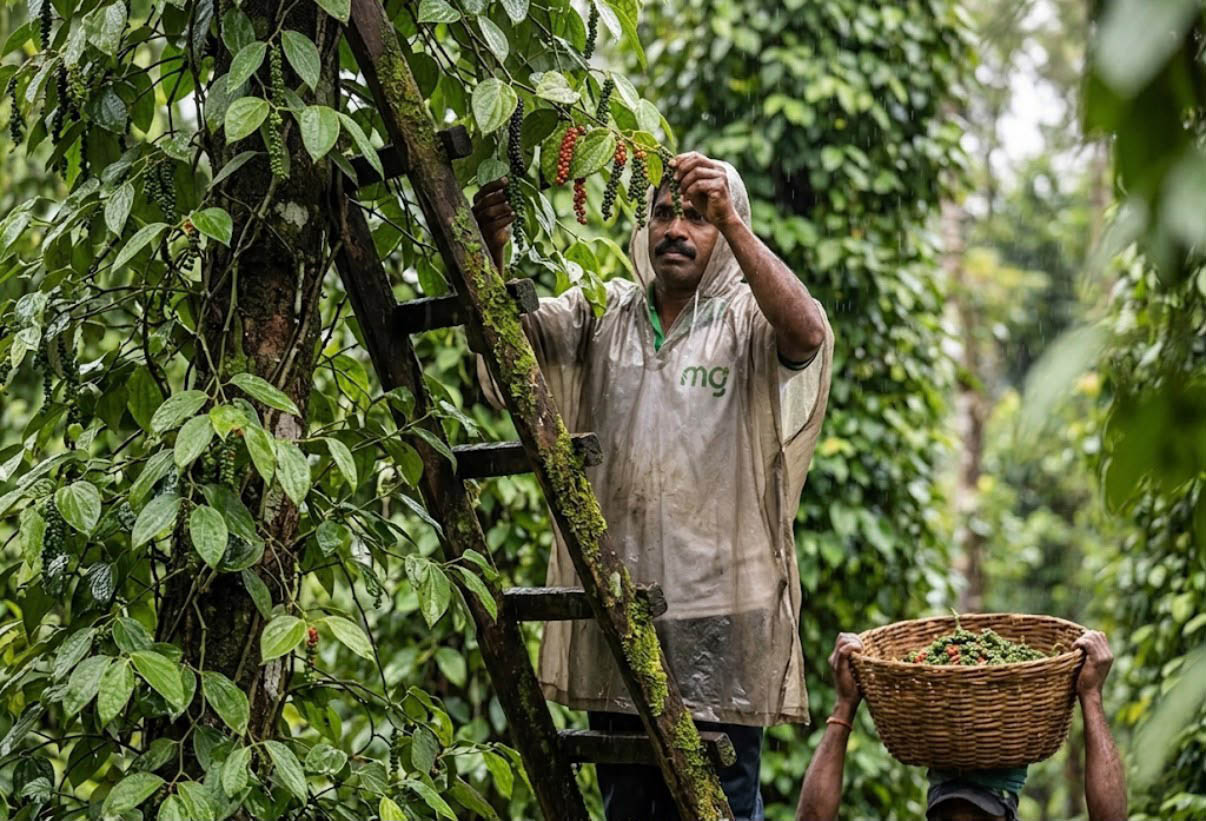
Known around the world as the “King of Spices,” black pepper has a legacy as bold as its flavor. Its story is one of nature’s beauty, human craftsmanship, and centuries of trade that connected distant continents. Every tiny peppercorn carries within it a journey — from the lush green vines of Kerala’s forests to the tables of homes and restaurants across the world.
Black pepper (Piper nigrum) originates from the Malabar Coast of Kerala, where the tropical climate and fertile red soil provide the perfect environment for its growth. Pepper vines climb tall trees or wooden supports, flourishing under the dappled shade of coconut and areca palms.
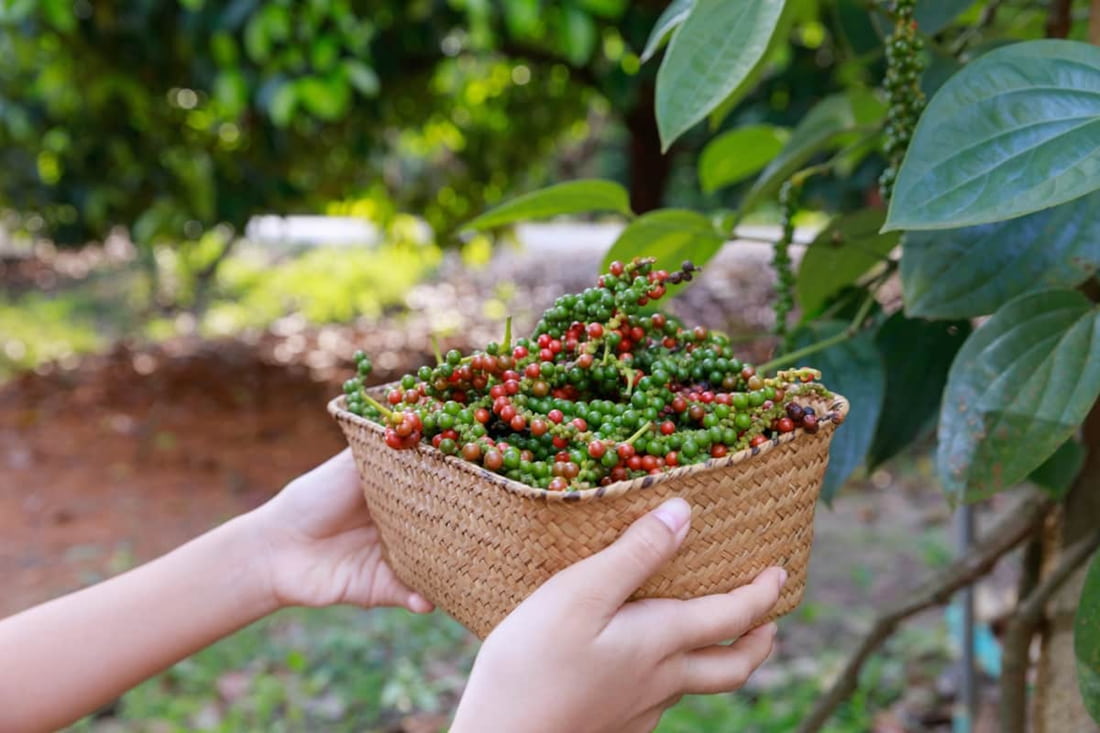
The vines begin to bear fruit after three to four years, producing clusters of tiny green berries that glisten under the morning mist. Each cluster tells a story of patience and care — of farmers who watch over the crop through rain and sun.
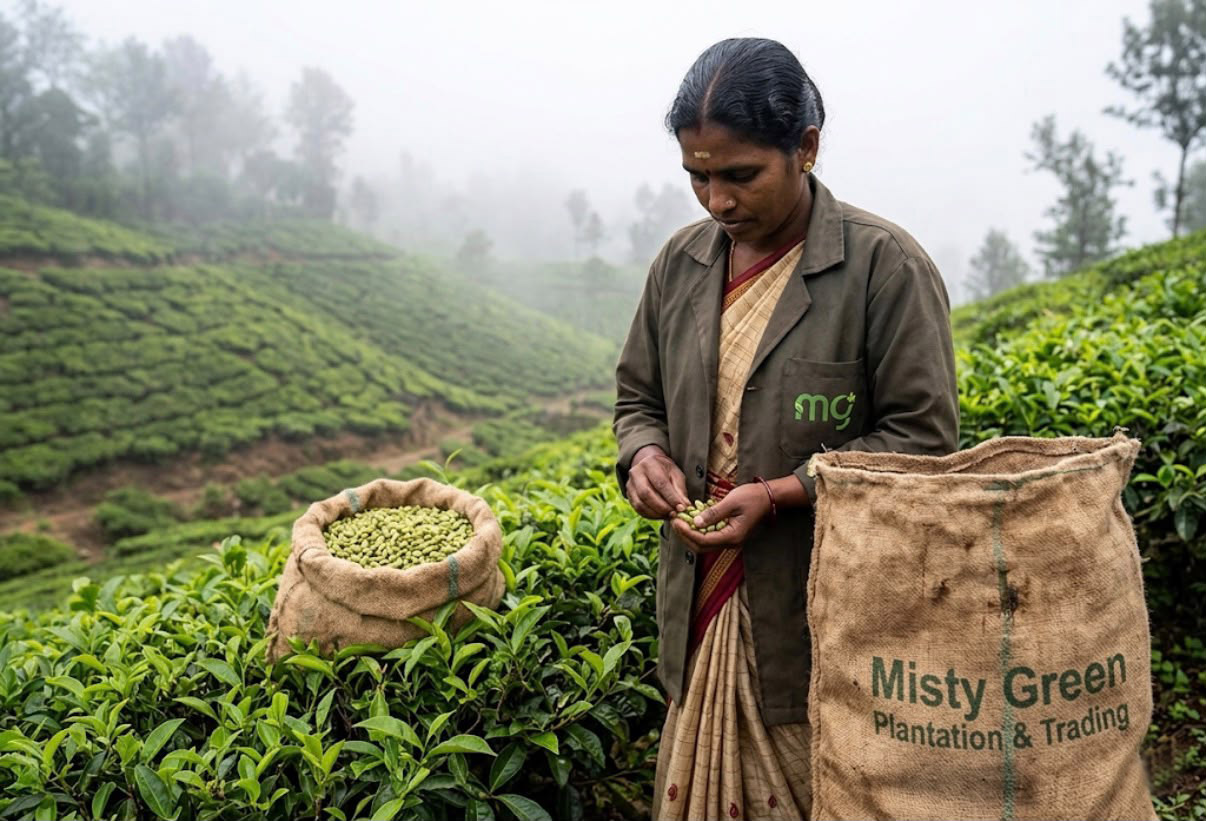
Harvest time is a season of both excitement and hard work. The pepper berries are picked just before they fully ripen — when they are still green but rich in flavor. Timing is crucial: too early, and the spice lacks aroma; too late, and the berries lose their oils.
After harvesting, the berries are boiled briefly in hot water, then sun-dried for several days until they shrink and turn deep black. This transformation gives black pepper its signature color, wrinkled texture, and sharp, complex aroma.
Once dried, the peppercorns are graded and sorted according to size, color, and quality. The finest varieties — bold, full-bodied, and aromatic — often come from Kerala’s Wayanad and Idukki regions.
Traders then pack and export this spice across the globe, where it continues to be a kitchen essential and a symbol of India’s rich agricultural heritage.
Black pepper’s influence goes far beyond flavor. In ancient times, it was so valuable it was used as currency. Roman merchants, Arab sailors, and European explorers all sought it, fueling centuries of global trade and even the Age of Exploration itself.
It’s no exaggeration to say that pepper helped shape the map of the modern world — connecting Asia, Africa, and Europe through a shared love of spice.
Beyond its culinary charm, black pepper is also celebrated for its health benefits. The compound piperine not only gives it heat but also enhances nutrient absorption and digestion.
Some key benefits include:
From the misty hills of Kerala to kitchens worldwide, black pepper’s journey is one of passion, tradition, and resilience. It stands as a symbol of India’s enduring connection to the world of spices — a timeless reminder that greatness often comes in the smallest of forms.
Even today, a sprinkle of black pepper doesn’t just add flavor — it adds history, warmth, and a touch of legacy to every meal.